What I learned running 15 AI workshops as a high school student
Join us as we explore the essentials of AI literacy, ethical technology, and how students can shape a responsible future with thoughtful learning.
5/8/20242 min read
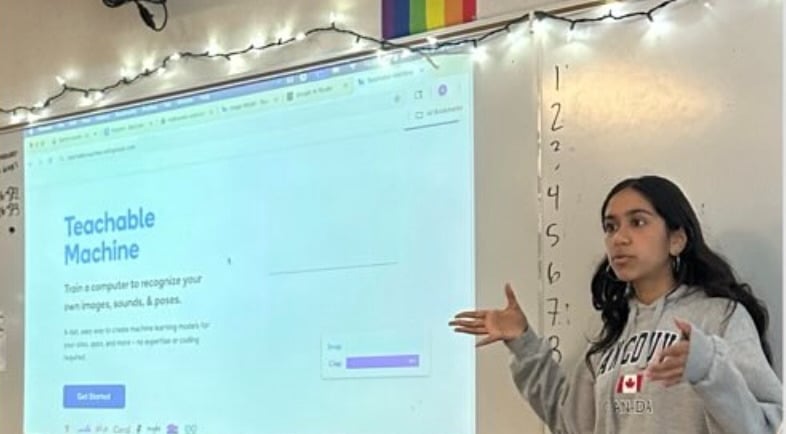
By Anadita Upadhyaya, Founder — The Lumina Initiative
When I delivered my first AI literacy workshop, I was nervous about the wrong things.
I worried about whether I knew enough. Whether students would take me seriously. Whether a 15-year-old standing at the front of a classroom talking about large language models would get laughed out of the room.
None of those things happened. What happened instead taught me more about AI education than any article or research paper I had read.
Here are the five most important things I learned across 15+ workshops and 100+ students.
1. Students are not afraid of AI. They are afraid of being left behind by it.
Every workshop I expected fear. What I found was anxiety — a quieter, more specific feeling. Students were not scared of robots. They were scared that AI would change the rules of school, work, and life faster than anyone would explain to them. That distinction matters because it changes what you teach. They did not need reassurance. They needed a map.
2. The questions younger students ask are better.
The most surprising thing I discovered running workshops in elementary schools was that third and fourth graders asked sharper questions than high schoolers. Not because they knew more — but because they had not yet learned to perform confidence. They asked exactly what they were thinking. "Who taught the AI what was true?" "Can it lie on purpose?" "What happens if it makes a mistake about someone's life?" High schoolers often already knew the approved answers. Younger students wanted the real ones.
3. Peer teaching changes what students are willing to say.
When an adult teaches AI literacy, students filter themselves. They give the answer they think the teacher wants. When a peer teaches it, something shifts. I watched students in my workshops say things they would never say to an adult instructor — "I use AI to write my essays and I don't know if that's cheating," "I believed something fake because an AI said it confidently." That honesty is where real learning begins. You cannot teach critical thinking about AI if students are performing understanding instead of revealing confusion.
4. The hardest topic is not how AI works. It is who AI works for.
I expected algorithmic bias to be the most abstract topic in our curriculum. It turned out to be the most personal. When students realized that AI systems can reflect the prejudices of the people who built them — and that those people do not look like most of the students in my workshops — the conversation changed completely. This is not a technical topic. It is a justice topic. Teach it that way.
5. One workshop is not enough. But one workshop is not nothing.
I used to worry that a single 60-minute session could not change how a student thinks about AI. I was right — it cannot. But I kept hearing from students weeks later, describing a moment when they remembered something from the workshop and thought differently about a tool they were using. A single session plants a question. Questions, once planted, are hard to ignore.
We are building an open-access starter kit so any student — anywhere, with any budget — can run workshops like these. If you want to bring AI literacy to your school or community, reach out at hello@thelumina.org.
The next generation of AI educators is not waiting to graduate. They are already in the classroom.
Explore our workshop programs at thelumina.org/ai-literacy-programs